
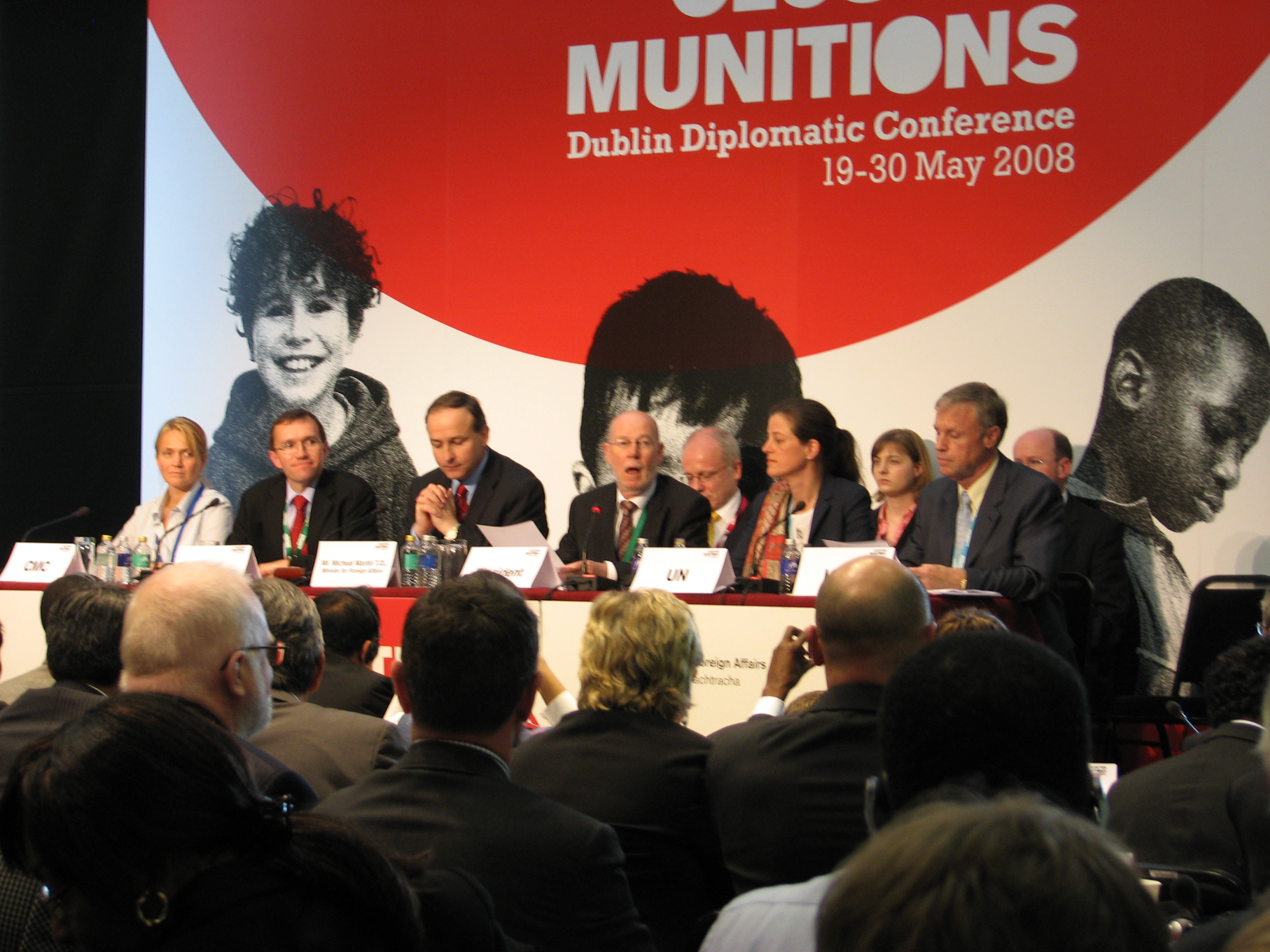
Dublin, 30 May 2008: The Day the World Said No to Cluster Munitions
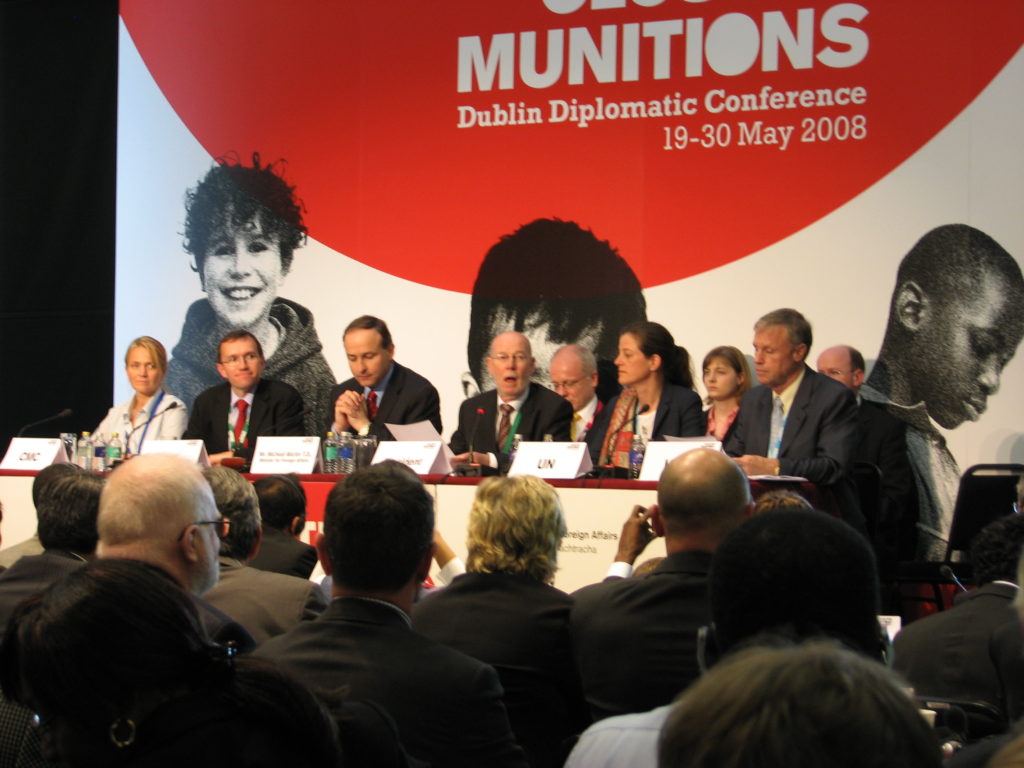
Eighteen years ago today, delegates from 109 countries gathered in Dublin and made history. After two weeks of intensive negotiations, they adopted the Convention on Cluster Munitions, a legally binding treaty prohibiting the use, production, stockpiling, and transfer of one of the most indiscriminate weapons in modern warfare.
The conference had opened on 19 May with a clear sense of mission. Ireland’s Minister Micheál Martin set the tone from the first day: “We owe it to the survivors of cluster munitions to ease their pain and give them hope. Together, we owe it to humanity to ensure there will be no more innocent civilian victims of cluster munitions.” He spoke of a “future unknown survivor” a symbolic person who, thanks to the new convention, would not fall victim to a cluster munition. There was, he said, no more compelling reason to work in good faith.
That sense of shared purpose was not confined to the host country. Zambia, speaking on behalf of the African States that had subscribed to the Livingstone Declaration, was unequivocal: Africa had resolved not to become a dumping ground for obsolete and destructive weapons. Mozambique, a country that had lived through the humanitarian consequences of landmines and unexploded remnants of war, reminded delegates that the voices of victims present in the room represented many thousands more who had “fallen prey to these subtle instruments of random death.” Botswana, Senegal, Benin, and Mauritania all added their voices, with Mauritania evoking the image of schoolchildren, farmers, and shepherds who should never again be prey to weapons buried long after conflicts had ended.
From Europe, Austria, one of the core group that had driven the Oslo Process, called the Convention potentially “the most important disarmament treaty in a long time.” Belgium, which had been the first country in the world to adopt national legislation banning cluster munitions, urged the highest level of ambition on both stockpile destruction and victim assistance. Venezuela called for a total and absolute prohibition, with no exceptions.
When the closing ceremony came on 30 May, the tone shifted from urgency to accomplishment. Norway’s Ambassador Kongstad called it “disarmament as humanitarian action” , driven not by military calculation, but by the testimony of survivors and affected communities. The UN Secretary-General welcomed a new international standard that would enhance civilian protection, strengthen human rights, and improve prospects for development. And Minister Martin closed with characteristic directness: the achievement would be reflected “not just in the Articles of the Convention but in the lives of those saved from the scourge of cluster munitions.”
Eighteen years on, 112 States Parties have joined the Convention. Stockpiles have been destroyed. Contaminated land has been cleared. Survivors have received assistance they were owed.
The work is not finished. But Dublin showed what is possible when states, civil society, and the international community act together with purpose — and refuse to look away.